Our first night in Galicia, the six of us sit down to dinner in the cosy, boutique dining room of the Quinta de San Amaro. It’s late April, and we’re on the outskirts of Meaño at an Inntravel hotel along the Portuguese Camino de Santiago. Our table is right by the window, and, outside, the setting sun bathes the landscape in a soft, watercolour light. The sky is fading from blue to pink, and peaceful vineyards, waiting patiently for their moment to bloom, slumber beside hushed houses. We only arrived an hour or so ago, but already we can feel the serene influence of our intimate surroundings.
The conversation naturally turns to spirituality. It would be impossible for it not to – here we are, about to spend a week exploring three ancient pilgrimage routes, all leading to the great cathedral in Santiago de Compostela, where our own trip will end. Countless numbers of pilgrims from all over the world have travelled these paths for centuries, embarking on their ‘Camino’ journey with the purpose of worshipping at the tomb of St James – one of Christ’s Twelve Apostles. Nowadays, people undertake the Camino de Santiago for various reasons – religious pilgrimage, a personal challenge, time for contemplation, or a rewarding holiday – but, whatever the personal cause, the experience often seems to be an evocative and poignant one, full of moments of appreciation, kinship, and reflection.
We ponder this, curiosity and excitement bubbling as we consider the week ahead. A quiet and beautiful corner of Spain with timeless significance – what learnings, what connection, what emotions might our own trip bring?
The conversation naturally turns to spirituality. It would be impossible for it not to – here we are, about to spend a week exploring three ancient pilgrimage routes, all leading to the great cathedral in Santiago de Compostela, where our own trip will end. Countless numbers of pilgrims from all over the world have travelled these paths for centuries, embarking on their ‘Camino’ journey with the purpose of worshipping at the tomb of St James – one of Christ’s Twelve Apostles. Nowadays, people undertake the Camino de Santiago for various reasons – religious pilgrimage, a personal challenge, time for contemplation, or a rewarding holiday – but, whatever the personal cause, the experience often seems to be an evocative and poignant one, full of moments of appreciation, kinship, and reflection.
We ponder this, curiosity and excitement bubbling as we consider the week ahead. A quiet and beautiful corner of Spain with timeless significance – what learnings, what connection, what emotions might our own trip bring?
What is the Camino de Santiago?
There are more than 200 officially recognised pilgrim routes (Caminos) to the city of Santiago de Compostela. Walkers must have completed a minimum of 100 kilometres along one of these, and finish in Santiago, to earn a certificate of completion from the Pilgrim Office. Stamps collected along the way in your Credencial (‘Pilgrim Passport’) are used to prove you’ve done the distance.
Inntravel offers itinerant holidays along three of the official routes – the popular French Way, quieter English Way, and historic Portuguese Way – making sure that you not only cover 100 kilometres, but do so with a few extra sights and stays at charming, hand-picked hotels added in.
Our task for the week is to experience as much of all three as we can.
Inntravel offers itinerant holidays along three of the official routes – the popular French Way, quieter English Way, and historic Portuguese Way – making sure that you not only cover 100 kilometres, but do so with a few extra sights and stays at charming, hand-picked hotels added in.
Our task for the week is to experience as much of all three as we can.
The Variante Espiritual, Portuguese Camino de Santiago
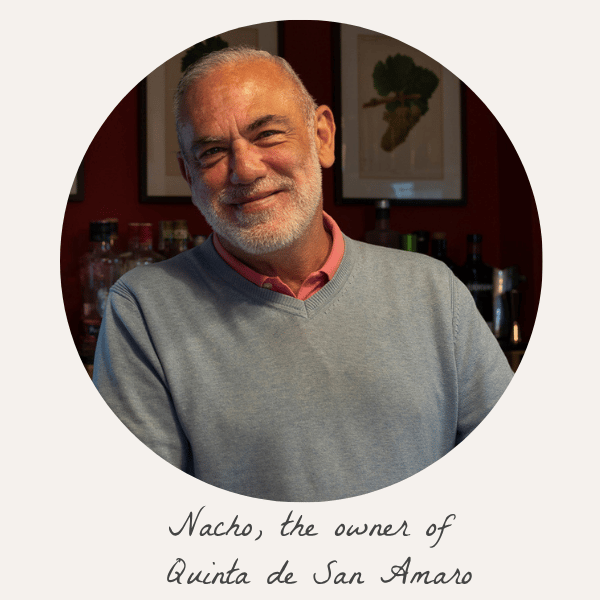 After a generous breakfast and a quick goodbye to Nacho, the owner of the Quinta de San Amaro, and his lovely family, we set off for the port of Vilanova de Arousa, where we’re due to take a boat trip along the Variante Espiritual (‘Spiritual Variant’) of the Portuguese Camino. Believed to be part of the route along which the body of St James was carried to Santiago in 44 AD, there are 17 crosses that mark the way up the Ría de Arousa and the Ulla River to the town of Padrón, near to which his stone boat is said to have landed.
Greeted by a cool breeze and an unusually choppy sea on arrival, we find that, thankfully, we’ll be travelling in a more modern vessel – a speed boat – though we’re still glad to have heeded the instructions from our captain, Gabriel, and his wife Cristina, to dress up warm as we zip along the coastline.
It’s an invigorating feeling. As the boat cuts through the glistening waves, I can feel the salty spray of the sea on my face, hear the hum of the engine and the whistle of the wind in my ears, and see gulls soaring overhead as the horizon rises and falls with the lush hills on either side of the estuary. It feels like freedom, and I can’t stop grinning.
We reach gentler waters upriver and Malcolm, our trip leader, tells us that the Camino de Santiago is all about meeting, and getting to know, new people. Gabriel brings the boat to a stop at regular points to show us the crosses that rise from riverbanks and rocky outcrops half-submerged by the tide along the way, and a man standing beside one on the shore spots our boat and waves. We wave back, smiling. Gabriel shares with us the history of the area – telling of pilgrims and Viking raids – and points out the mussel farms to be seen quietly bobbing on the surface of the water, beeping the horn of the boat so we can greet the fishermen working on the floating platforms. He buys us a coffee to warm our hands from the wind when we make a stop in Pontecesures – from where Inntravellers will disembark and continue the journey on foot – and he presses the first of my Camino stamps into my notebook for me on our return to the harbour (I haven’t yet managed to buy a pilgrim passport).
The delighted laughs of our group – which swiftly became the soundtrack to our boat ride – ring in my ears as I step back onto dry land, and I can’t help but feel that Malcolm is right. Already, we’ve formed a deeper bond with not only past and present pilgrims, and the locals who make their living here, but with each other too.
A sense of nature – the English Camino
After the boat trip, we make the drive up to Pontedeume in northwestern Galicia, named for its bridge over the Eume River. It’s time to take in the English Way, and the town’s sunny streets, overlooked by bright, traditional galerías (windowed balconies) seemingly on every building, offer us a warm welcome.
We have a 20-kilometre walk the following day, navigating from Pontedeume to the town of Betanzos using our Inntravel walking notes and the handy scallop-shell signs (the symbol of the Camino) that pepper the route.
Setting off early, it’s a bit of a climb out of the town (we’re grateful for the breakfast buffet we enjoyed at the Hotel Albatros for the extra energy), but it’s all worth it when we emerge at the top of the hill into what I can only describe as a panoramic, rural utopia.
Glorious, green countryside stretches as far as the eye can see, and the sleepy haze of the early-morning sunshine is starting to dissipate, bringing into focus the earth’s rich hues under a wide, cerulean sky. Fields and farmland blanket the slopes, knitted together with pockets of deep-green woodland, and bright ferns feather the roadside. It’s the perfect pastoral – humankind and nature in harmony.
As we continue along the tranquil road, my awe of the landscape only increases, and my senses are alive with new sights, smells, and sounds. Pastures give way to towering eucalyptus forests – their lush fragrance infusing the air, leaves rustling silver in the breeze, and their bark peeling into jungle-like fronds. We stop in peaceful hamlets to breathe in the summery scent of orange blossom as it hangs over garden walls, and to admire the traditional hórreos (elevated granaries once used for storing grain) that stand in quiet monument to the past. In A Ponte do Porco, our footsteps tap out a jovial rhythm on the wooden boardwalk that skirts the edges of a secluded white-sand beach, and, at the crest of another hill, we spot a bird of prey swooping over distant meadows, cicadas serenading the scene. It’s like paradise.
And, not long before our arrival into Betanzos, the simple yet powerful majesty of our surroundings is exemplified by even the sun itself. Following shouts from my colleagues, I look up at the sky. There’s a halo around the sun, in an optical phenomenon caused by the refraction of light off ice crystals in the clouds.
In true celestial fashion, our burning star has donned its crown.
We have a 20-kilometre walk the following day, navigating from Pontedeume to the town of Betanzos using our Inntravel walking notes and the handy scallop-shell signs (the symbol of the Camino) that pepper the route.
Setting off early, it’s a bit of a climb out of the town (we’re grateful for the breakfast buffet we enjoyed at the Hotel Albatros for the extra energy), but it’s all worth it when we emerge at the top of the hill into what I can only describe as a panoramic, rural utopia.
Glorious, green countryside stretches as far as the eye can see, and the sleepy haze of the early-morning sunshine is starting to dissipate, bringing into focus the earth’s rich hues under a wide, cerulean sky. Fields and farmland blanket the slopes, knitted together with pockets of deep-green woodland, and bright ferns feather the roadside. It’s the perfect pastoral – humankind and nature in harmony.
As we continue along the tranquil road, my awe of the landscape only increases, and my senses are alive with new sights, smells, and sounds. Pastures give way to towering eucalyptus forests – their lush fragrance infusing the air, leaves rustling silver in the breeze, and their bark peeling into jungle-like fronds. We stop in peaceful hamlets to breathe in the summery scent of orange blossom as it hangs over garden walls, and to admire the traditional hórreos (elevated granaries once used for storing grain) that stand in quiet monument to the past. In A Ponte do Porco, our footsteps tap out a jovial rhythm on the wooden boardwalk that skirts the edges of a secluded white-sand beach, and, at the crest of another hill, we spot a bird of prey swooping over distant meadows, cicadas serenading the scene. It’s like paradise.
And, not long before our arrival into Betanzos, the simple yet powerful majesty of our surroundings is exemplified by even the sun itself. Following shouts from my colleagues, I look up at the sky. There’s a halo around the sun, in an optical phenomenon caused by the refraction of light off ice crystals in the clouds.
In true celestial fashion, our burning star has donned its crown.
‘Heavy with history’ – the French Camino & Santiago de Compostela
Sitting round with teas and coffees in a quiet Ferrol square before heading to our planned section of the French Camino, we chat about places around the world that feel unique, charged somehow with an unexplainable, transcendental energy, and spots that, as my colleague Lucy puts it, feel ‘heavy with history’. There are two places remaining on our itinerary that we particularly expect to match this description. We find we’re not wrong.
The first is the tiny village of Samos, which, being located just off the French Camino, is missed by most pilgrims walking the final 100 kilometres to Santiago. The Inntravel French Way, however, begins here.
Samos itself is a quiet road of houses, with a few shops and restaurants, nestled in a deeply wooded valley. Birdsong trickles from the trees in all directions, accompanied only by the sound of the gently flowing river that loops the village. But what’s truly spectacular about Samos is the Benedictine monastery at its heart, subtle yet striking, and still active today.
We arrive just in time for a tour of the monastery (in Spanish, so Malcolm is tasked with some rapid-fire translating!) and are shown through to the silent, internal cloister. The grey sky casts atmospheric shadows behind each stone column and light drizzle falls softly on the immaculate garden in the centre of the courtyard. There is barely a sound to be heard, and no one but the tour group to be seen. It’s as if the building itself is watching and listening, holding its breath, as engrossed in us as we are in its hauntingly beautiful design.
Led along the echoing halls, we learn, through Malcolm, about the history of the monastery, founded here in the sixth century. We admire a Baroque fountain, the old pharmacy, and the multicoloured light streaming ethereally into the main church through a circular stained-glass window above the organ, but my favourite part is easily the quadrangle of corridors on the first floor, overlooking the cloister. Here, the walls are covered, floor to ceiling, with devotedly painted murals depicting St Benedict and scenes from the Bible. Angels, cloaked figures, animals, humans, and landscapes – all are brought to life upon the stone, forming a dreamlike tapestry. And, situated in this storybook setting, they certainly do evoke a feeling of the fantastical and metaphysical.
The first is the tiny village of Samos, which, being located just off the French Camino, is missed by most pilgrims walking the final 100 kilometres to Santiago. The Inntravel French Way, however, begins here.
Samos itself is a quiet road of houses, with a few shops and restaurants, nestled in a deeply wooded valley. Birdsong trickles from the trees in all directions, accompanied only by the sound of the gently flowing river that loops the village. But what’s truly spectacular about Samos is the Benedictine monastery at its heart, subtle yet striking, and still active today.
We arrive just in time for a tour of the monastery (in Spanish, so Malcolm is tasked with some rapid-fire translating!) and are shown through to the silent, internal cloister. The grey sky casts atmospheric shadows behind each stone column and light drizzle falls softly on the immaculate garden in the centre of the courtyard. There is barely a sound to be heard, and no one but the tour group to be seen. It’s as if the building itself is watching and listening, holding its breath, as engrossed in us as we are in its hauntingly beautiful design.
Led along the echoing halls, we learn, through Malcolm, about the history of the monastery, founded here in the sixth century. We admire a Baroque fountain, the old pharmacy, and the multicoloured light streaming ethereally into the main church through a circular stained-glass window above the organ, but my favourite part is easily the quadrangle of corridors on the first floor, overlooking the cloister. Here, the walls are covered, floor to ceiling, with devotedly painted murals depicting St Benedict and scenes from the Bible. Angels, cloaked figures, animals, humans, and landscapes – all are brought to life upon the stone, forming a dreamlike tapestry. And, situated in this storybook setting, they certainly do evoke a feeling of the fantastical and metaphysical.
The second must, of course, be the Cathedral of Santiago de Compostela.
It’s our final night in Galicia and, after a week of exploring a few different branches of the Camino, it’s a must that we spend it at the place that’s been held for so long in the minds of all pilgrims making the journey, no matter where or when they set off.
We approach from a side street, but even from this angle I gasp at the sight of the cathedral. The grand architecture has such power and presence, even if only glimpsed for a second over the rooftops or between alleyways, that feelings of awe, inspiration, and appreciation sweep through me in constant waves throughout the evening. When we round the corner to the front of the building and see the cathedral towers soaring towards the sky and the façade gleaming almost golden in the light of the evening sun, when we’re in the cathedral shop and the deep, sonorous tones of the mighty organ resounds through the walls, and when we listen to a band playing traditional Galician music in the square out the front, the silver moon suspended over the spires, I’m completely captivated.
It makes me think of the pilgrims and travellers from all over the world who have stood, are standing, and will one day stand where I am now, and I can’t help but feel connected to them. To have come so far and to be rewarded with this magnificent sight can only be a special experience. It’s the ultimate finale.
And, as my colleagues and I tread through the cool Santiago streets early the following morning for one last visit to the cathedral before our flight home, I realise that we have had a spiritual journey in our own way – getting to know each other, learning, and experiencing a new place together, which is, as Malcolm said, what the Camino is all about.
It’s our final night in Galicia and, after a week of exploring a few different branches of the Camino, it’s a must that we spend it at the place that’s been held for so long in the minds of all pilgrims making the journey, no matter where or when they set off.
We approach from a side street, but even from this angle I gasp at the sight of the cathedral. The grand architecture has such power and presence, even if only glimpsed for a second over the rooftops or between alleyways, that feelings of awe, inspiration, and appreciation sweep through me in constant waves throughout the evening. When we round the corner to the front of the building and see the cathedral towers soaring towards the sky and the façade gleaming almost golden in the light of the evening sun, when we’re in the cathedral shop and the deep, sonorous tones of the mighty organ resounds through the walls, and when we listen to a band playing traditional Galician music in the square out the front, the silver moon suspended over the spires, I’m completely captivated.
It makes me think of the pilgrims and travellers from all over the world who have stood, are standing, and will one day stand where I am now, and I can’t help but feel connected to them. To have come so far and to be rewarded with this magnificent sight can only be a special experience. It’s the ultimate finale.
And, as my colleagues and I tread through the cool Santiago streets early the following morning for one last visit to the cathedral before our flight home, I realise that we have had a spiritual journey in our own way – getting to know each other, learning, and experiencing a new place together, which is, as Malcolm said, what the Camino is all about.